
Interactive pain recovery · In development
A McKenzie Method / MDT-based app that changes course when your symptoms do.
NeuroActive is being developed to guide you through structured movement testing, track meaningful changes in your symptoms, and determine what to try next from the response, not from a generic exercise list. The first interactive pathway will focus on low-back pain.
A different kind of pain app
Don't start with the exercise. Start with the response.
Many exercise apps begin with a diagnosis, body part, or list of exercises and then tell everyone with that label to do roughly the same thing.
NeuroActive is being built around a different idea: test something meaningful, observe what actually changes, and use that response to decide what comes next.
The pain-recovery system draws heavily from Mechanical Diagnosis & Therapy (MDT), commonly associated with the McKenzie Method. Concepts such as repeated movement, directional preference, centralization, symptom location, range of motion, and force progression help organize the pathway.
The development roadmap
Low back first. More regions planned.
The initial interactive release will focus on low-back pain. The broader NeuroActive platform is being designed to expand into neck and additional musculoskeletal pathways over time. The screens below show the current development interface and the response-based logic being built into the system.
Inside NeuroActive
Choose. Test. Respond. Adapt.
Instead of handing you a static routine, the interactive pathway is designed to move through a sequence of decisions. What you report after testing a movement changes what the system asks you to do next.
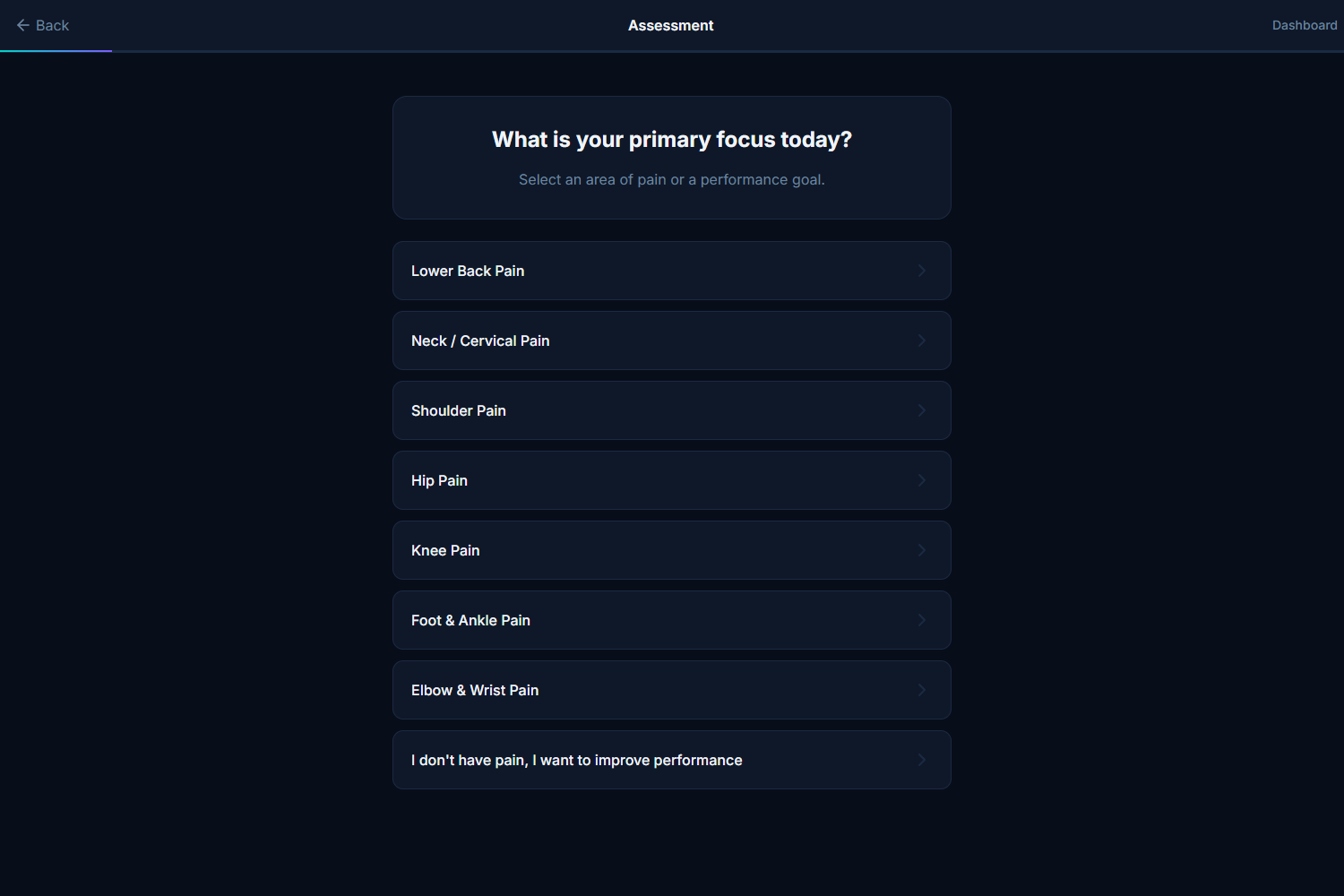
01 · Choose
Start with the problem you're trying to solve.
The broader interface is designed around pain regions and movement goals. The first interactive pathway being prepared for release is low-back pain.
02 · Test
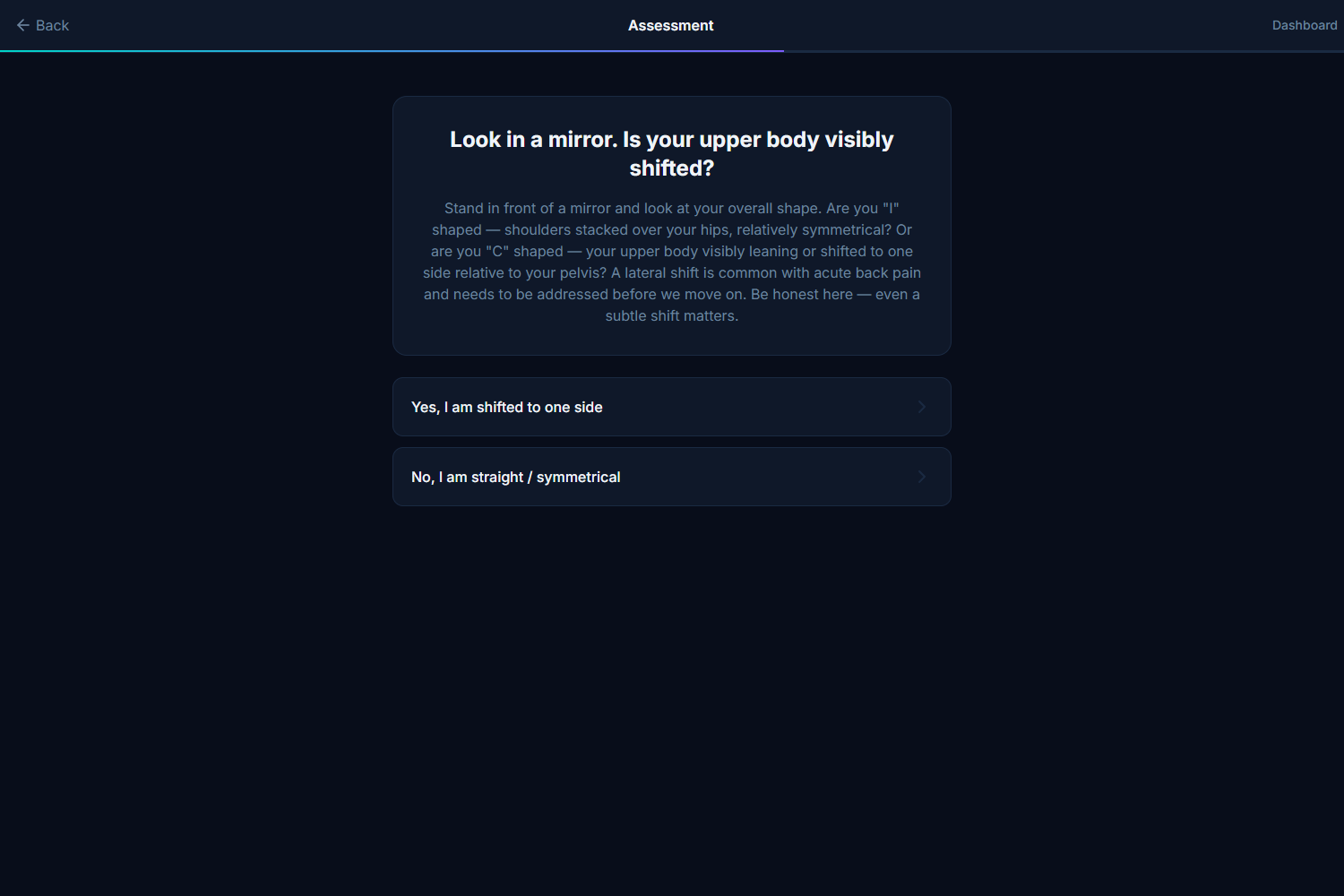
Test something that can change the mechanical picture.
The pathway asks targeted questions and guides mechanical testing rather than assuming that symptom location alone tells us what exercise you need.
03 · Respond
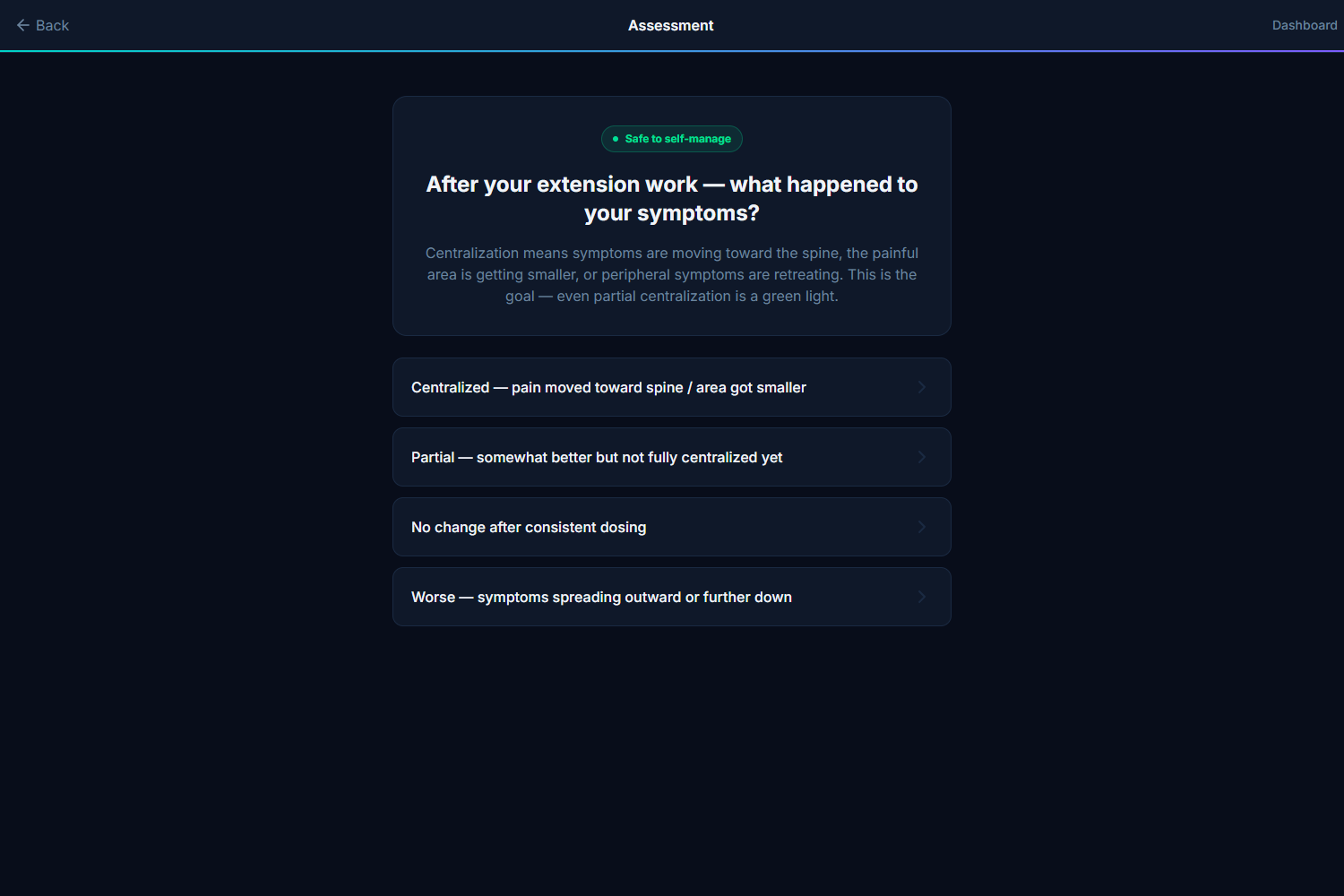
What happened matters more than what you expected.
The system tracks meaningful responses such as centralization, partial improvement, no change, or symptoms spreading farther away from the spine.
04 · Adapt
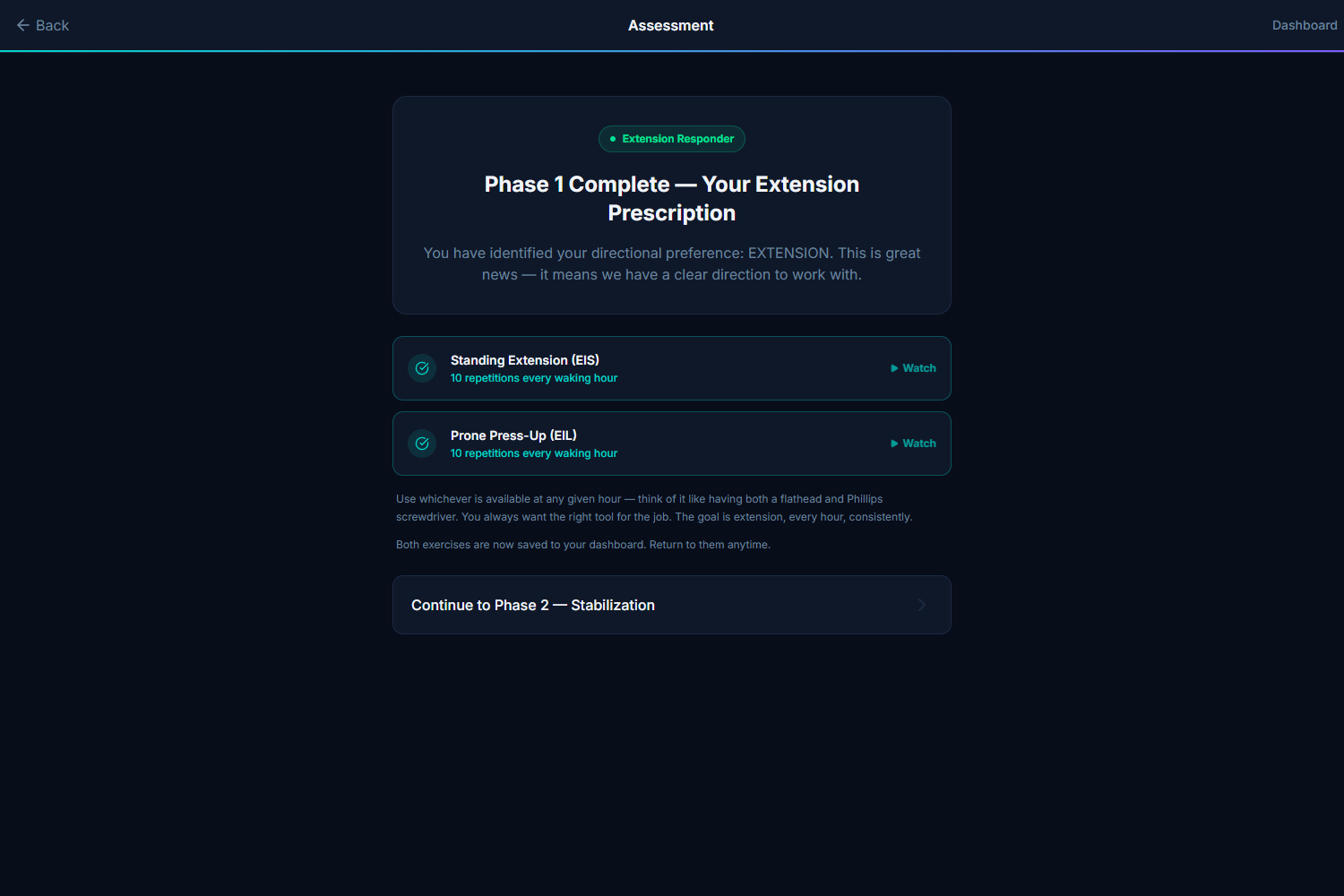
The response determines the next step.
When a clear directional preference emerges, NeuroActive can turn that finding into a structured plan and continue progressing from there rather than leaving you with an isolated exercise.
Need something now?
You don't have to wait for the interactive app.
The current Low-Back Pain Guide uses the same basic response-based idea in a self-guided format: test movement, watch what happens to your symptoms, and use that response to help determine what to try next.
Follow the development
Be notified when the low-back pathway opens.
Get launch updates and opportunities for early access to NeuroActive's interactive pain-recovery app.
The NeuroActive Framework
First change the problem.
Then build a system less likely to repeat it.
NeuroActive draws heavily from two systems that have shaped Dr. Bruene's clinical work. McKenzie Mechanical Diagnosis & Therapy (MDT) helps identify whether a mechanical problem responds to a specific movement strategy. Dynamic Neuromuscular Stabilization (DNS) provides a framework for rebuilding movement capacity, control, and resilience once symptoms allow.
McKenzie Mechanical Diagnosis & Therapy
MDT helps ask:
What changes the problem?
Repeated movement, directional preference, centralization, symptom behavior, and mechanical response help identify what improves the current problem and what should happen next.
Dynamic Neuromuscular Stabilization
DNS helps ask:
How do we build from here?
Once symptoms are improving and movement is tolerable, the focus can shift toward breathing, trunk control, coordination, load, and increasingly complex movement. The goal is not simply to feel better, but to build greater movement capacity for what comes next.